Foundation Warranty Mistakes That Can Cost Austin Homeowners Thousands
June 29, 2026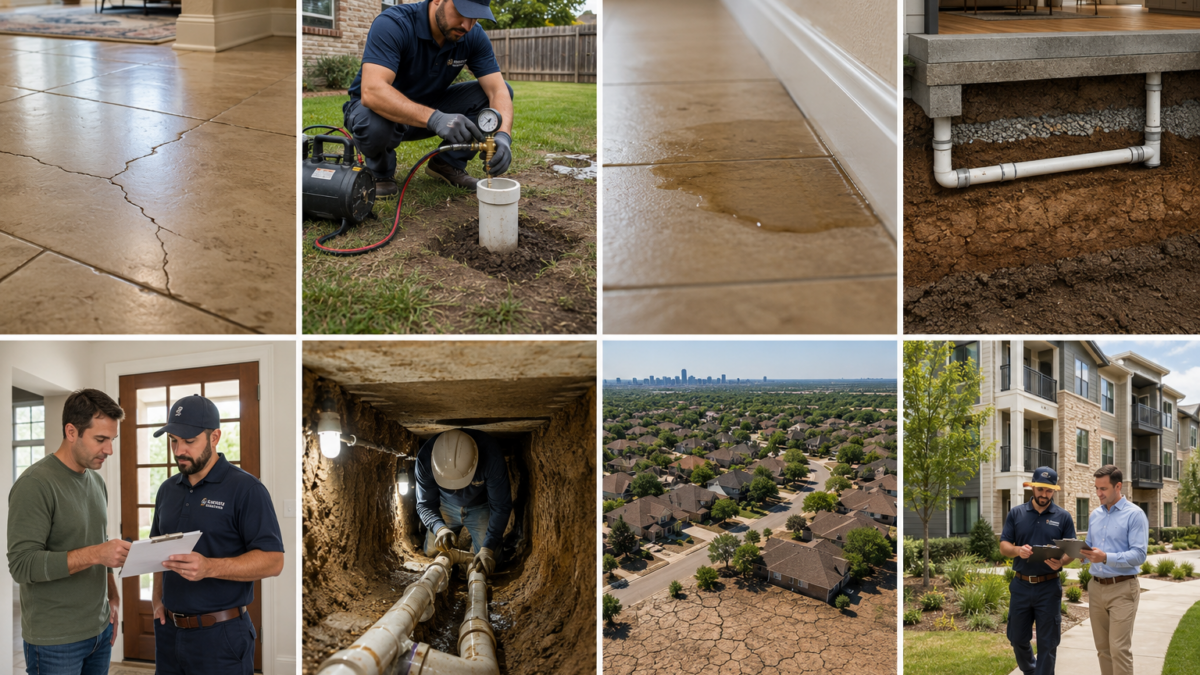
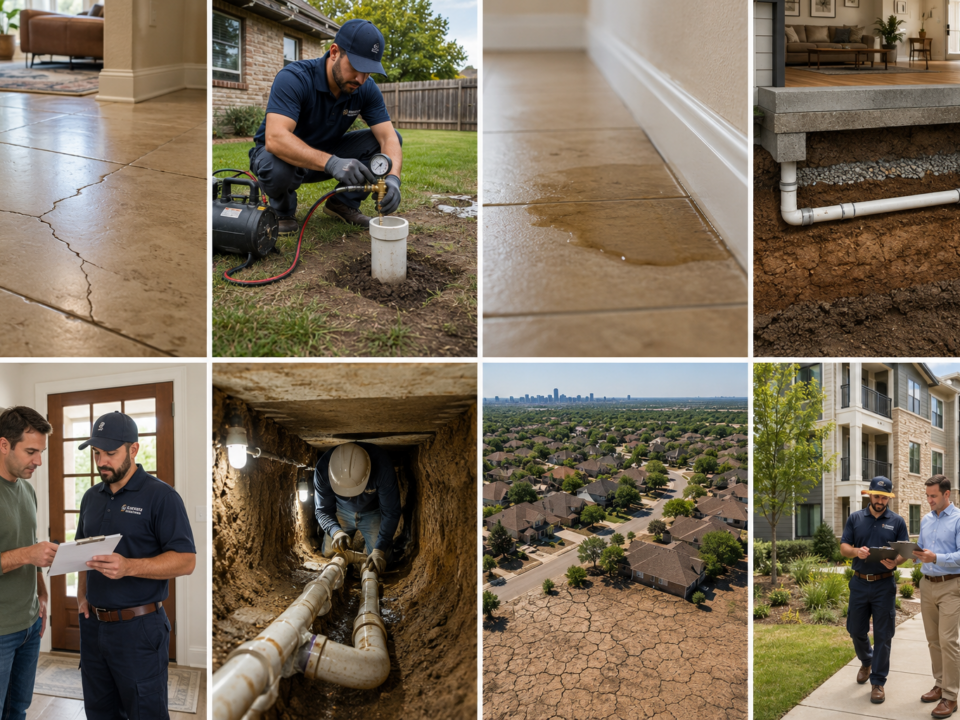
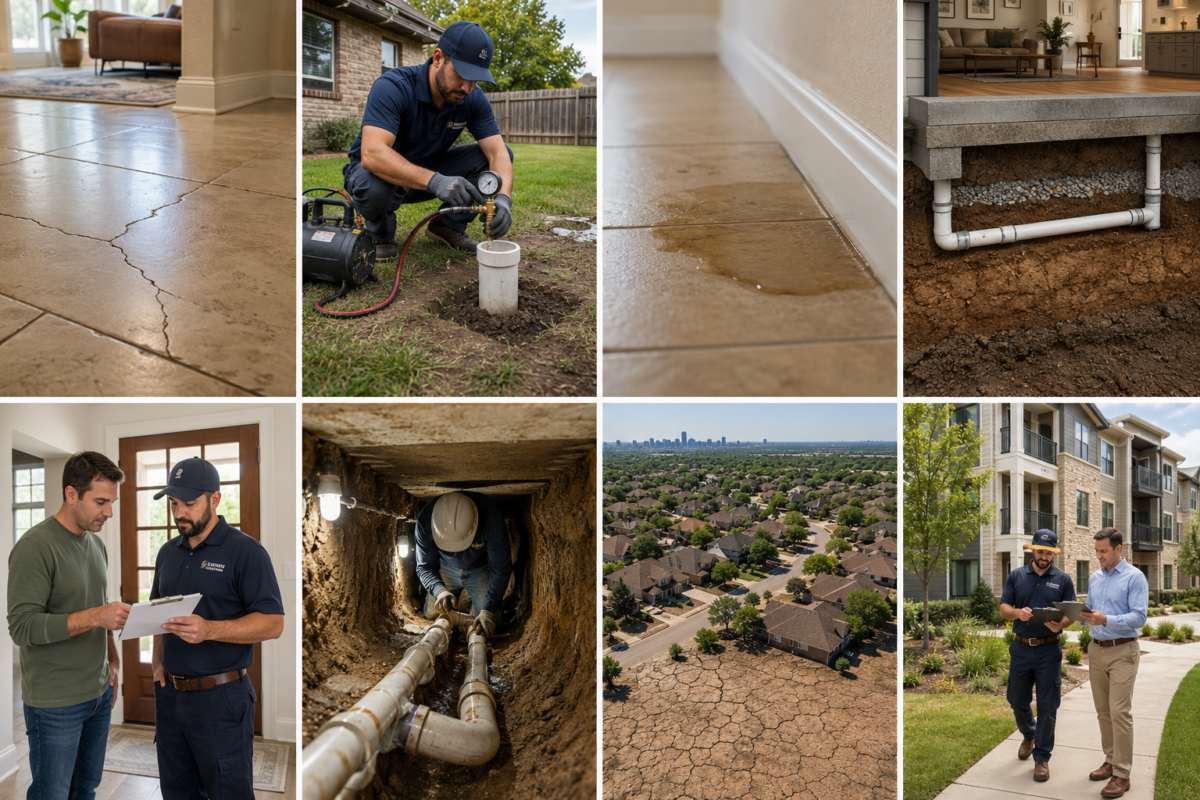
A slab leak is one of the most stressful plumbing situations an Austin homeowner can face. It is invisible, potentially expensive, and if left unaddressed, can damage both your plumbing system and your foundation. But it is a solvable problem and catching it early makes a significant difference in both cost and outcome.
What Is a Slab Leak?
A slab leak is a leak in the water supply or drain lines that run beneath your home’s concrete slab foundation. In Central Texas, most homes are built on concrete slabs, and these pipes are embedded in or just below the concrete, making them invisible until a leak becomes significant enough to show surface signs.
What Causes Slab Leaks in Austin?
- Expansive clay soil: Central Texas clay expands and contracts significantly with moisture changes, creating constant abrasion and stress on buried pipes over time.
- Hard water: Austin’s water supply is high in calcium and magnesium, which accelerates corrosion inside copper pipes — common in Austin homes built before 1990. See: Hard Water in Austin Homes.
- Aging pipes: Homes built from the 1960s through 1990s typically have copper supply lines now 30 to 60 years old. Older pipe walls are more vulnerable to pinhole leaks and joint failures.
- High water pressure: Pressure above 80 PSI accelerates wear on pipe joints and fittings. Without a properly calibrated pressure-reducing valve, pipes under the slab are under constant stress.
- Poor installation: In some cases, pipes were installed without adequate protection against abrasion from surrounding concrete.
Signs You May Have a Slab Leak
- Unexplained increases in your water bill without any change in usage
- Warm or damp spots on the floor — especially on tile or concrete
- The sound of running water when all fixtures are off
- Low water pressure throughout the home
- Cracks in flooring, tile, or drywall near floor level
- Mold or mildew smell near the floor or in cabinets against exterior walls
- Foundation cracking or movement — a slab leak saturating soil can cause differential settlement
For a detailed walkthrough of these warning signs: 5 Signs Your Plumbing May Be Affecting Your Foundation
How Slab Leaks Are Detected
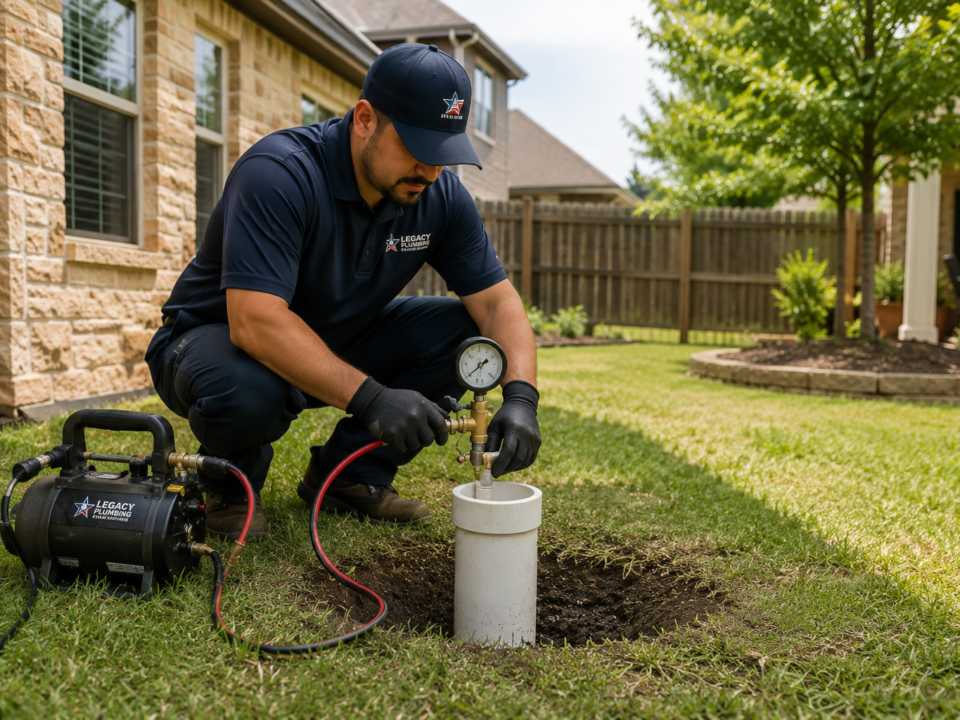
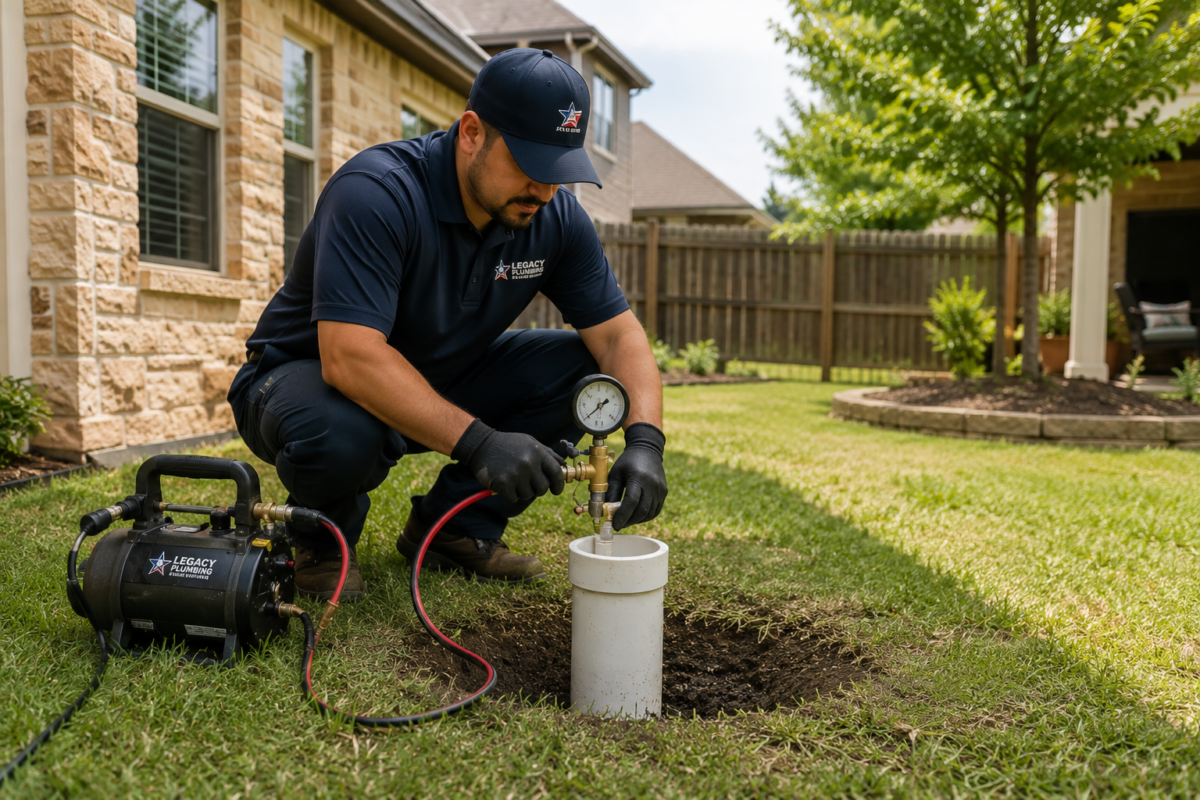
- Hydrostatic pressure test: Confirms whether a leak exists. Often the first step — $200 to $500.
- Electronic leak detection: Acoustic listening devices detect water escaping under pressure, pinpointing the location without opening the slab — $150 to $400.
- Camera inspection: A video camera run through the pipe to visually identify cracks, joint separations, or blockages — $100 to $300.
- Thermal imaging: Detects temperature variations in the floor caused by a hot water line leak — often included with a full diagnostic evaluation.
Slab Leak Detection Costs in Austin
| Detection Method | Low Estimate | Mid Estimate | High Estimate |
|---|---|---|---|
| Hydrostatic pressure test | $200 | $350 | $500 |
| Electronic / acoustic detection | $150 | $275 | $400 |
| Camera / video pipe inspection | $100 | $200 | $300 |
| Thermal imaging | $150 | $250 | $400 |
| Full diagnostic package (all methods) | $400 | $650 | $900 |
Detection costs vary based on home size, number of access points, and whether multiple methods are needed to locate a specific leak. Prices reflect Austin/Central Texas market averages.
Slab Leak Repair Options and Costs in Austin
There is no single right answer for slab leak repair. The best approach depends on the location of the leak, the age and condition of the surrounding pipes, and the extent of damage. Here are the main options:
| Repair Method | Low Estimate | Mid Estimate | High Estimate |
|---|---|---|---|
| Spot repair (accessible location) | $500 | $1,200 | $2,500 |
| Pipe rerouting (single line) | $1,500 | $2,500 | $4,500 |
| Tunneling (under-slab access) | $2,500 | $5,000 | $8,500 |
| Tunneling (multiple repairs) | $5,000 | $8,000 | $15,000 |
| Full repipe (whole home) | $4,500 | $8,000 | $15,000+ |
| Concrete restoration (after repair) | $500 | $1,500 | $3,500 |
Costs vary significantly based on pipe depth, floor type (tile vs. slab vs. hardwood), access difficulty, and whether secondary damage such as mold or soil erosion requires remediation. These are Austin/Central Texas market averages — always get at least two quotes for under-slab work.
The True Cost of Waiting
Early detection dramatically changes the cost picture. A slab leak caught at the first sign of a rising water bill — before it saturates the soil and contributes to foundation movement — is a plumbing repair. A slab leak that goes undetected for 6 to 18 months becomes a plumbing repair plus potential foundation repair plus water damage remediation.
| Scenario | Estimated Cost | What This Means |
|---|---|---|
| Leak detected early (rising water bill) | $350–$900 | Detection + accessible repair — manageable cost |
| Leak detected at floor moisture stage | $600–$3,000 | Detection + repair + minor flooring remediation |
| Leak detected at foundation cracking stage | $2,500–$8,500 | Plumbing repair + foundation assessment + possible piers |
| Leak undetected — full foundation movement | $8,000–$25,000+ | Plumbing repair + full foundation repair + water damage |
| Leak undetected — warranty voided | $8,000–$40,000+ | All above costs with no warranty recovery available |
Each stage of delay roughly doubles the total remediation cost. A $350 hydrostatic test at the first sign of a problem can prevent a $15,000+ repair project 12 months later.
Slab Leaks and Foundation Damage
A slab leak that goes undetected for an extended period can contribute to foundation problems. Water saturates the clay soil beneath the slab unevenly, causing differential settlement — the same mechanism behind most Austin foundation problems. If you are dealing with both a slab leak and foundation movement, the plumbing must be addressed first.
For a full explanation: Foundation Repair & Plumbing in Austin: What Every Homeowner Needs to Know
Frequently Asked Questions
How long can a slab leak go undetected?
Slab leaks can go undetected for months or even years, particularly in drain lines. Supply line leaks tend to show signs sooner through water bill increases or pressure drops, but can still run for weeks before symptoms are obvious enough to prompt action.
Does homeowner’s insurance cover slab leak repair in Texas?
Most standard policies cover sudden and accidental water damage — such as flooring or drywall damage — but do not cover the cost of the plumbing repair itself. Policies with water backup or service line coverage may offer additional protection. Review your policy and contact your insurer before assuming coverage.
Is tunneling or rerouting better for a slab leak?
Neither is universally better. Tunneling preserves your floor finish and allows direct repair of the damaged pipe, but is more labor-intensive and typically costs more. Rerouting avoids the slab entirely and may be preferable if pipes are aging throughout or if the leak is in a particularly inaccessible location. A licensed plumber should evaluate both options based on your home’s specific conditions.
Can I stay in my home during slab leak repair?
In most cases, yes. Spot repairs and tunneling are typically completed within one to several days. If a full repipe is required, there may be periods without water in specific areas, but work is usually scheduled in phases to minimize disruption.
How do I compare slab leak repair quotes in Austin?
Make sure each quote specifies the same repair method, the same scope of work, and includes concrete restoration if applicable. Ask each company how they plan to locate the leak before repair — companies that skip thorough detection and go straight to opening the slab may leave you with unnecessary damage. For under-slab work in Austin, a $2,000 to $5,000 range between quotes for the same job is not unusual.