Foundation Repair & Plumbing in Austin, TX: What Every Homeowner Needs to Know
June 29, 20265 Signs Your Plumbing May Be Affecting Your Foundation
June 29, 2026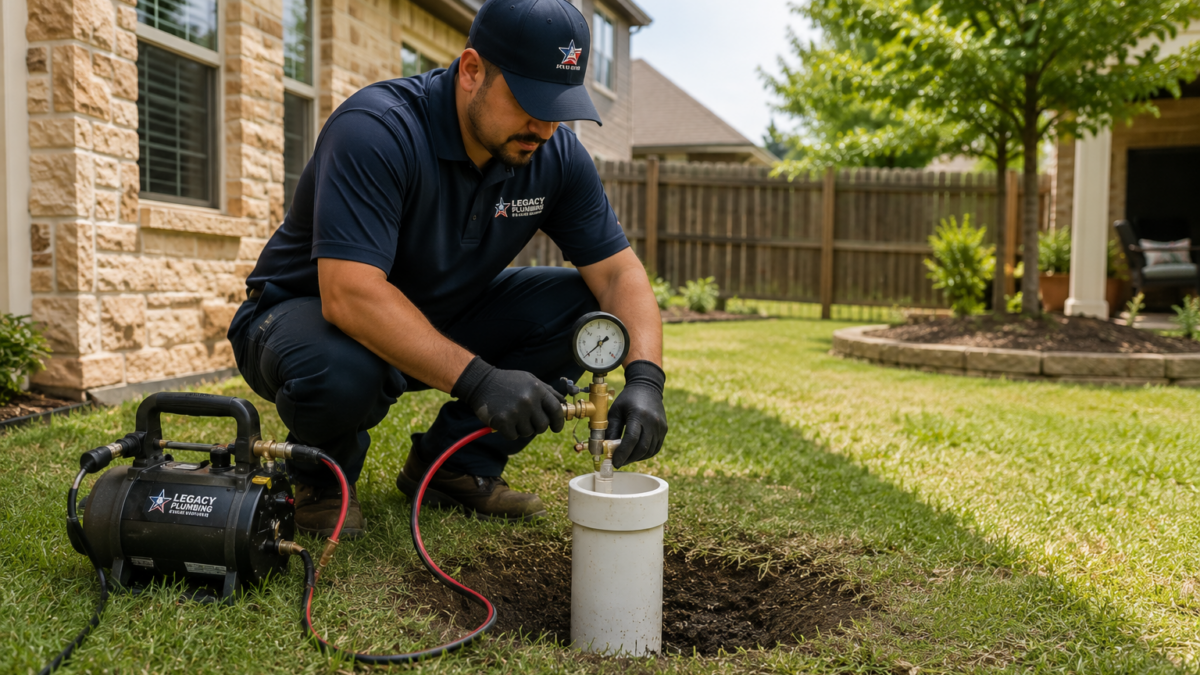
In most cases, yes — a hydrostatic test is required before foundation repair in Austin. Most foundation repair companies will not begin work without one, and most foundation warranties require documentation that your plumbing system was tested before and after the repair. Here is everything you need to know.
What Is a Hydrostatic Test?
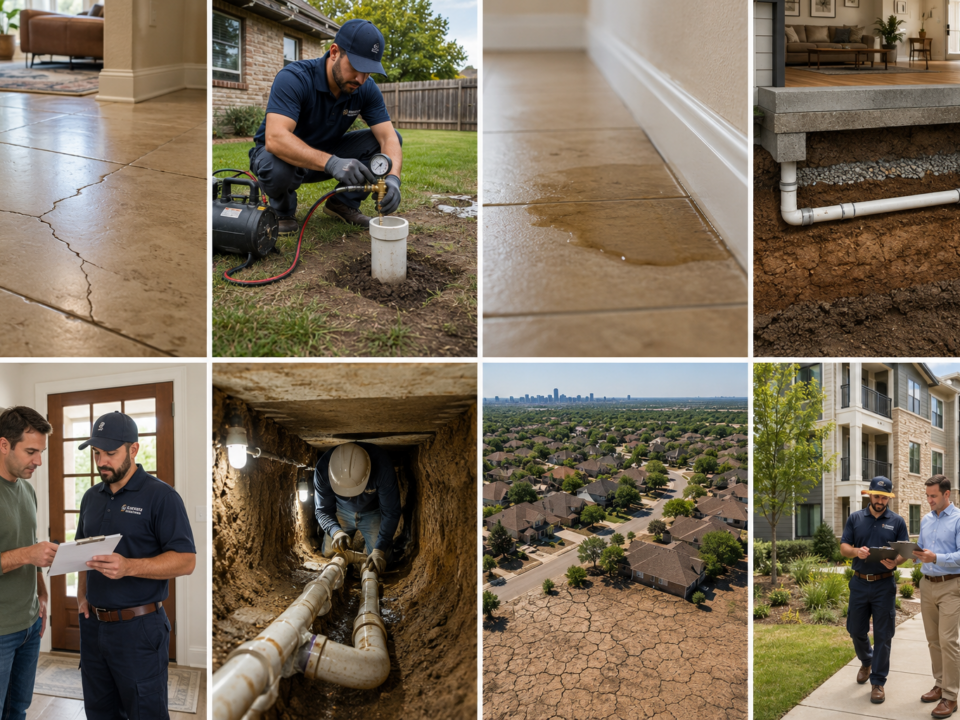
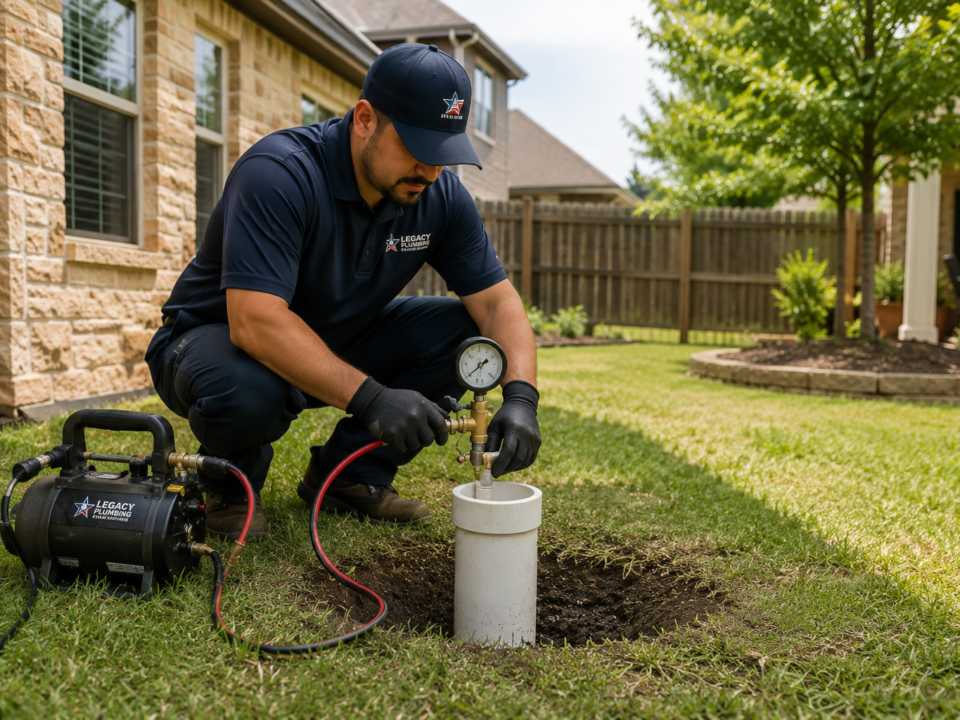
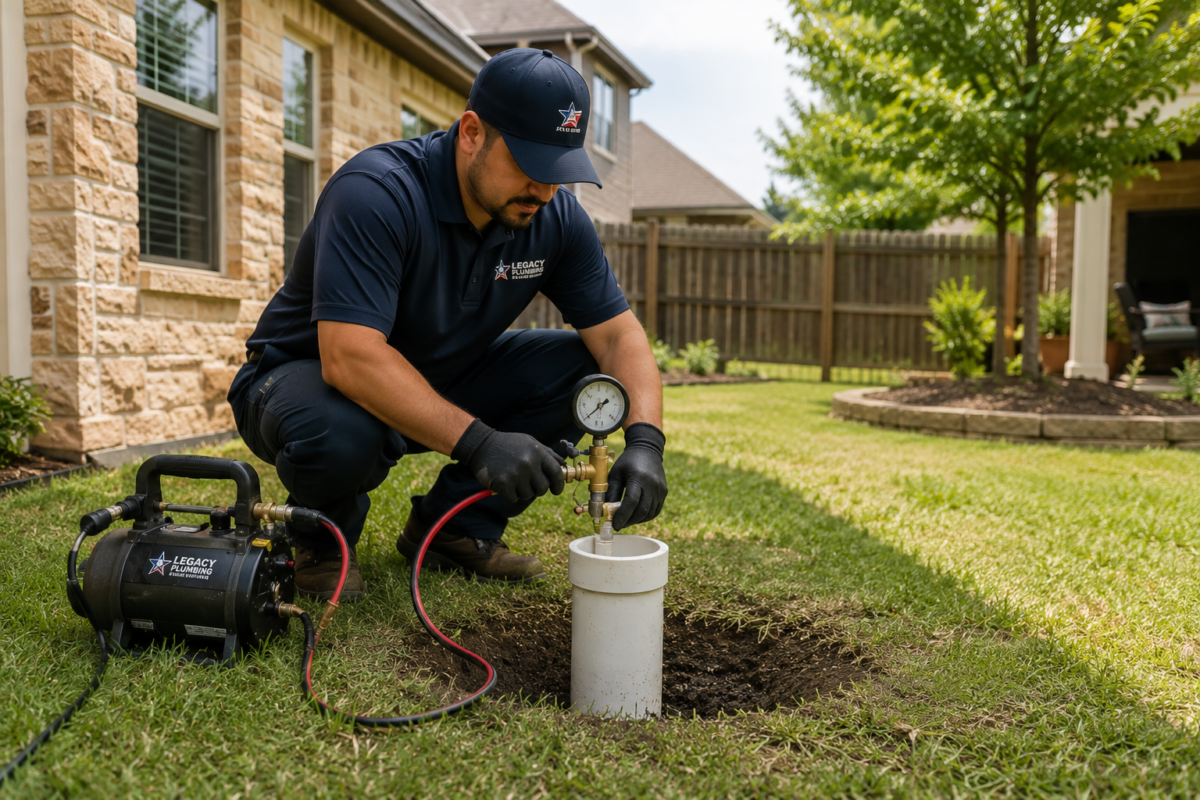
A hydrostatic test checks your home’s underground drain and sewer system for leaks. A licensed plumber fills the drain pipes with water under controlled pressure and monitors whether the water level holds. If it drops, there is a leak somewhere beneath your slab. The test is non-invasive — no digging, no cutting into floors — and typically takes 1 to 2 hours.
Why Is a Hydrostatic Test Required Before Foundation Repair?
- Most Austin-area foundation repair companies require a passing test before work begins. A leaking drain pipe beneath the slab saturates the soil and will undermine any foundation repair done on top of it.
- Foundation warranties typically require documentation of a plumbing inspection before the repair. Without it, your warranty may not be valid.
- Repairing a foundation over a leaking pipe is like painting over a water stain without fixing the roof — the underlying problem will resurface.
How Much Does a Hydrostatic Test Cost in Austin?
Austin Area Hydrostatic Testing Costs — Market Averages
| Service | Low Estimate | Mid Estimate | High Estimate |
|---|---|---|---|
| Hydrostatic test only | $200 | $350 | $500 |
| Hydrostatic test + camera inspection | $300 | $500 | $750 |
| Full foundation plumbing evaluation | $400 | $600 | $900 |
| Isolation testing (locate specific leak) | $350 | $500 | $700 |
| Post-repair retesting (warranty doc) | $150 | $250 | $400 |
Austin/Central Texas market averages. Costs vary based on home size, number of access points, and whether isolation testing is needed after a failed result.
The ROI Case: What Does It Cost to Skip the Test?
A hydrostatic test is a diagnostic investment. Skipping it — or delaying it — can be an expensive decision in the long run. Here is what the math looks like:
| Scenario | Estimated Cost | What This Means |
|---|---|---|
| Pre-repair hydrostatic test | $200–$500 | Confirms plumbing status before foundation work begins |
| Plumbing repair if leak found (early) | $500–$3,000 | Catch it now, fix it cleanly before foundation work |
| Foundation repair with clean plumbing | $5,000–$15,000 | Repair holds because the root cause is resolved |
| Foundation repair WITHOUT hydrostatic test | $5,000–$15,000 | Same cost — but the root cause may not be resolved |
| Foundation re-repair 12–24 months later | $5,000–$15,000+ | Same problem returns because the pipe leak was never fixed |
| Voided warranty claim (missed test) | $0 recovery | Warranty provider denies claim — homeowner pays full cost again |
| Water damage from undetected slab leak | $3,000–$20,000+ | Flooring, drywall, mold remediation — often not fully covered |
Austin/Central Texas market averages. Actual costs vary by home size, repair scope, and insurance coverage.
Total cost of skipping the test: potentially $10,000–$50,000+ over 3 to 5 years. The hydrostatic test itself costs a fraction of one foundation repair call.
What Happens During the Test: Step by Step
- Plumber locates and accesses the home’s cleanout — the access point for the drain system.
- An inflatable test ball is inserted to isolate the drain system.
- The system is filled with water to a controlled level.
- The plumber monitors the water level over a set period.
- Pass: level holds. Fail: level drops — there is a leak.
- Written report provided for your foundation company and warranty file.
What If the Test Fails?
A failed test means there is a leak in your underground drain system. It does not mean your home is in crisis — it means the leak needs to be located and repaired before foundation work begins.
- Camera inspection: Locates the exact source of the leak.
- Repair options: Range from targeted spot repairs to pipe rerouting depending on location and severity.
- Tunneling: For leaks beneath the slab, tunneling is often the least disruptive repair method. [INTERNAL LINK: Hydrostatic Testing & Tunneling Service Page]
- Retest: After repairs, the hydrostatic test is repeated to confirm the system passes before foundation work begins.
Do You Need a Post-Repair Test Too?
Yes, in most cases. After foundation repair is complete, most warranty providers require a second hydrostatic test to confirm the work did not disturb the plumbing. This post-repair test is documented and filed with your foundation contractor.
Next Steps: Ready to Schedule Your Hydrostatic Test in Austin?
Whether you are preparing for foundation repair, maintaining a foundation warranty, or simply want to rule out an under-slab leak, scheduling a hydrostatic test is the right first step. The process is straightforward, non-invasive, and typically completed within a few hours.
Here is what to do next:
- Call or book online to schedule your hydrostatic test — same-day appointments are available most days in the Austin area.
- Let us know your situation — whether you are pre-repair, post-repair, or investigating a suspected leak, the approach may vary slightly and we will confirm the right scope for your needs.
- Receive your written report — after the test is complete, you will receive documentation of the result suitable for your foundation contractor and warranty file.
- If repairs are needed, we will walk you through your options clearly — including costs, methods, and timeline — before any work begins.
Frequently Asked Questions
How long does a hydrostatic test take?
A standard test takes approximately 1 to 2 hours. If isolation testing is needed to locate a specific leak after a failure, the appointment may run longer. Most tests can be scheduled same-day or next-day.
Will homeowner’s insurance cover a hydrostatic test?
Hydrostatic testing is typically not covered by standard homeowner’s insurance as it is a diagnostic service. However, if the test reveals a covered plumbing leak, some repair costs may be covered depending on your policy. Check with your insurer for specifics.
Can I skip the hydrostatic test if my foundation company does not require one?
Technically yes, but it is not recommended. An undetected plumbing leak beneath the slab will continue to soften soil and can cause the same foundation movement to recur. The test cost is a fraction of what recurrence costs.
Does the testing company provide documentation for foundation warranty files?
Yes, a licensed plumber should provide a written test report documenting the date, result, and any repairs completed. This documentation is submitted to your foundation contractor and kept on file for warranty purposes.
What is the difference between a hydrostatic test and a camera inspection?
A hydrostatic test confirms whether a leak exists by testing pressure. A camera inspection visually identifies cracks, offset joints, or blockages inside the pipe. They are often used together — the hydrostatic test confirms a leak exists, and the camera inspection locates exactly where it is.