Smart Leak Detection & Water Monitoring for Central Texas Homes
October 9, 2025
Do I Need a Hydrostatic Test Before Foundation Repair in Austin?
June 29, 2026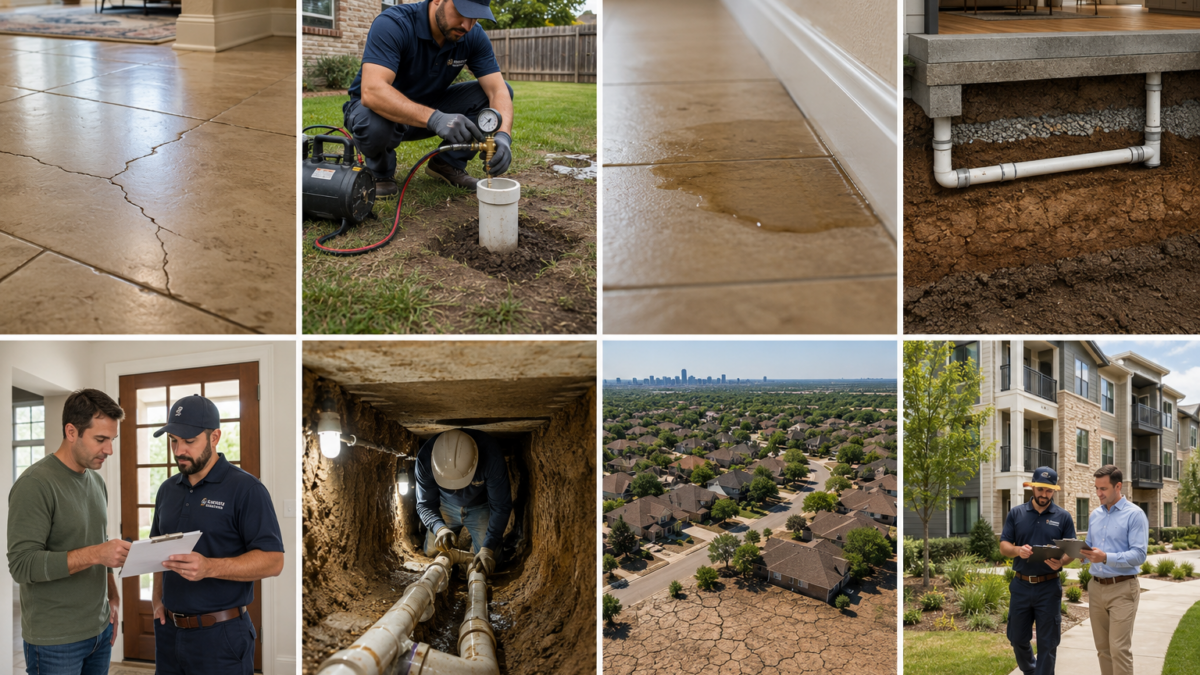
The Short Answer: Your Foundation and Your Plumbing Are Connected
If you are an Austin homeowner facing foundation repair, your plumber needs to be part of the conversation — even if nobody told you that yet. In Central Texas, foundations and plumbing systems are physically intertwined. Understanding why — and what to do about it — can save you thousands of dollars, protect your foundation warranty, and prevent the same problem from coming back.
Why Austin Foundations Move
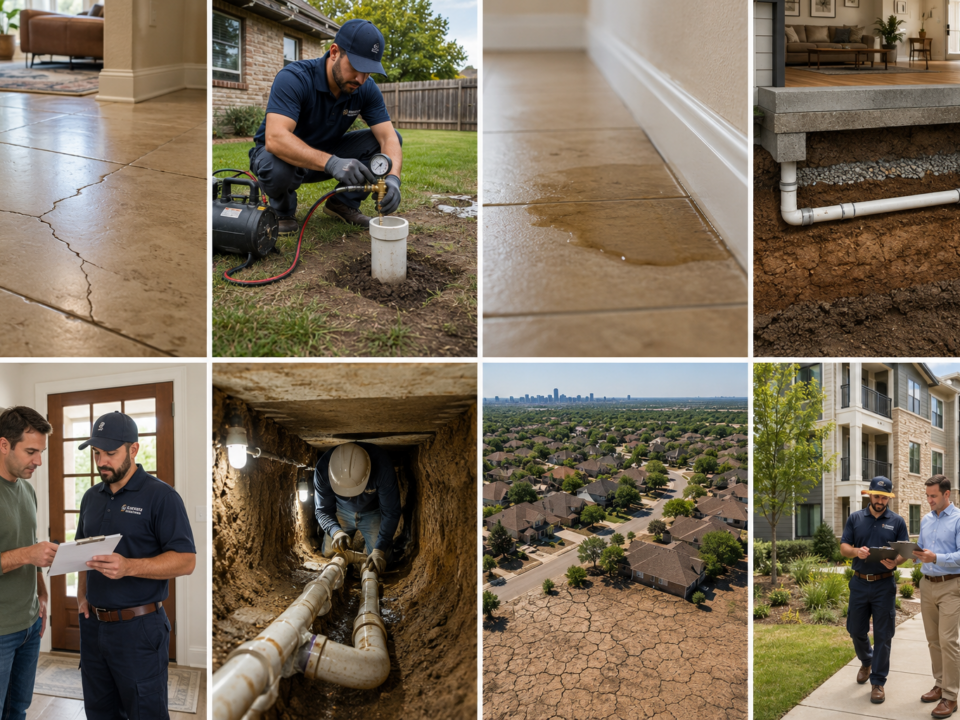
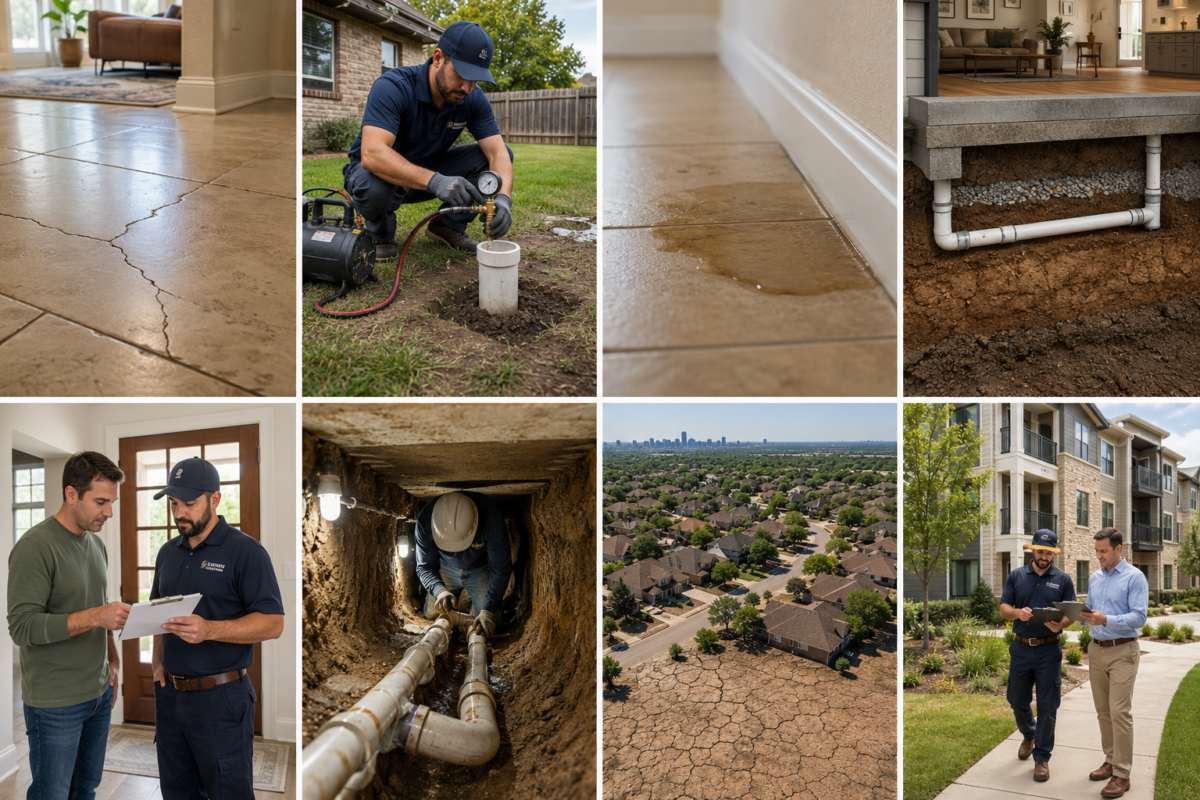
Central Texas sits on expansive clay soil. Unlike sandy or rocky soil, clay swells when it absorbs water and shrinks dramatically when it dries out. Austin’s cycle of intense droughts followed by heavy rains means the ground beneath your home is constantly expanding and contracting. Over time, this movement puts stress on your concrete slab foundation — causing it to crack, shift, or settle unevenly.
Where Plumbing Comes In
Your home’s drain and sewer lines run directly beneath or through your slab. When the foundation shifts, it can crack or separate buried pipes, cause joints to pull apart, compress pipes until they restrict flow, and break connections where pipes penetrate the slab.
The relationship also runs the other direction. When pipes leak under the slab, water saturates the soil unevenly — softening it in one area while the rest stays dry. That uneven moisture creates differential movement that causes the foundation to crack or shift. A plumbing leak can cause foundation movement, and foundation movement can cause plumbing leaks.
What Is a Hydrostatic Test and Why Does It Matter?
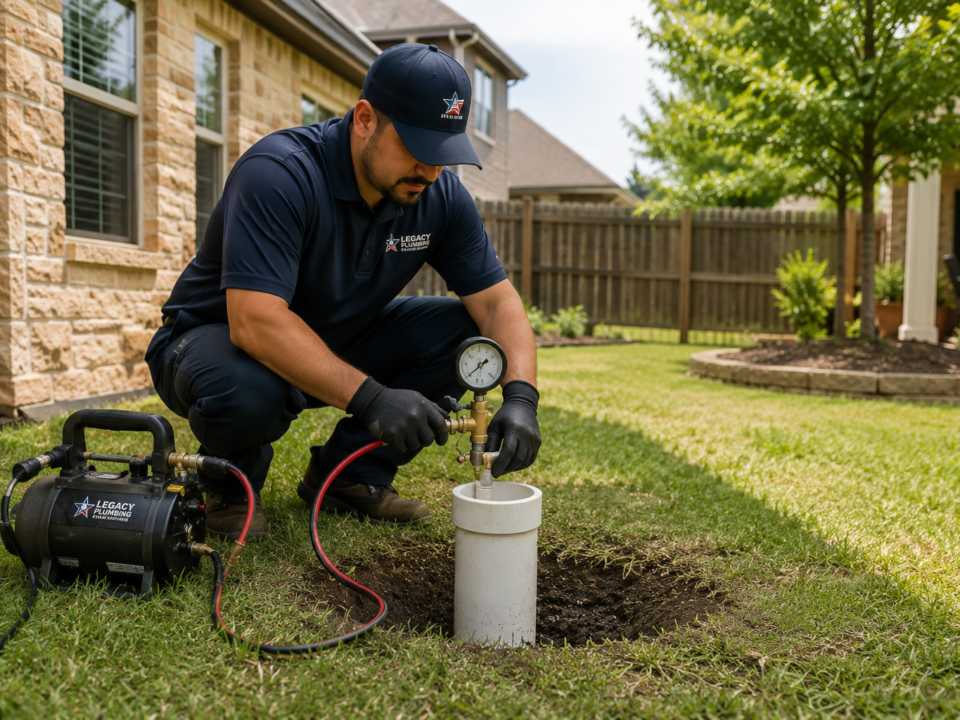
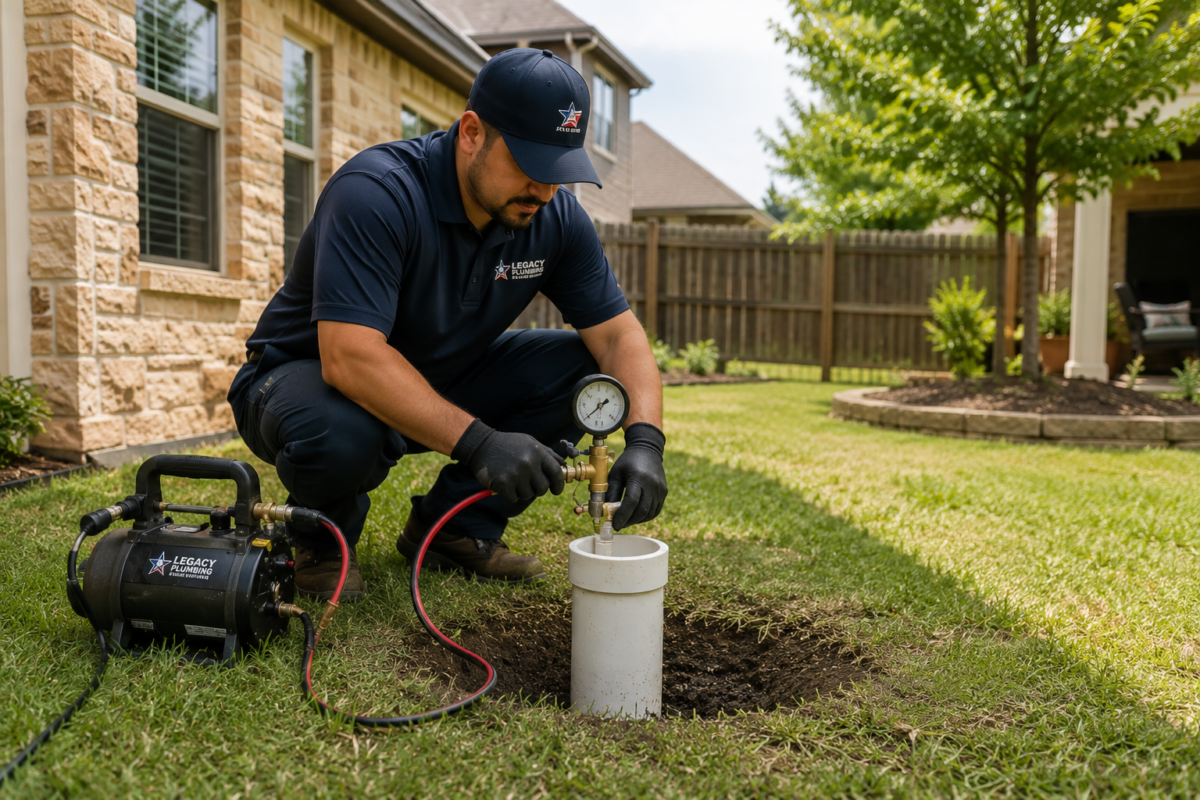
Before most foundation repair companies begin work, they require a hydrostatic test — a pressure test of your home’s underground drain system to check for leaks. If leaks are present and not repaired first, the water will continue saturating the soil and undermine the repair. Most foundation warranties also require a passing hydrostatic test both before and after repair.
Signs You May Have a Foundation-Related Plumbing Problem
- Unexplained increases in your water bill
- Warm or damp spots on floors
- Cracks in drywall, tile, or exterior brick that appeared suddenly
- Doors or windows that no longer close properly
- The sound of running water when everything is turned off
- Sewer odors inside or near the home
What to Expect During Foundation Repair
- Pre-repair hydrostatic test to identify any leaks in the drain system
- Plumbing repairs if leaks are found — tunneling, pipe replacement, or rerouting
- Foundation repair by the foundation contractor
- Post-repair hydrostatic test to confirm the plumbing system is intact
- Documentation filed with the foundation company for warranty purposes
Flint Plumbing handles all plumbing steps in this process.
Frequently Asked Questions
Can a plumbing leak cause foundation damage in Austin?
Yes. When pipes leak beneath a slab, water saturates the clay soil unevenly. Expansive clay swells where it is wet and shrinks where it is dry, creating differential movement that causes the foundation to crack or shift. Fixing the plumbing leak is often the first step in addressing foundation problems.
Does foundation repair always require a plumber?
Not always, but often. Most foundation repair companies require a hydrostatic test before work begins. If the test reveals leaks, a licensed plumber must complete repairs before foundation work can start. A post-repair test is also required for most warranties.
What is a slab foundation and why is it common in Austin?
A slab foundation is a concrete pad poured directly on the ground that your home sits on. It is the most common foundation type in Central Texas because it suits local clay soil conditions. Your drain and sewer lines run beneath or through this slab.
How do I know if my foundation problem is related to plumbing?
The most reliable way is a hydrostatic pressure test. Signs that suggest a plumbing connection include unexplained water bill increases, damp or warm floor spots, and cracks that appeared suddenly. A licensed plumber can evaluate and determine whether plumbing is contributing.
What does foundation-related plumbing work typically cost in Austin?
Costs vary significantly based on what is found. A pre-repair hydrostatic test typically runs $250 to $500. If leaks are found, repairs range from a few hundred dollars for accessible spot fixes to several thousand for tunneling or rerouting