Do I Need a Hydrostatic Test Before Foundation Repair in Austin?
June 29, 2026
7 Questions to Ask Before Hiring a Foundation Repair Company in Austin
June 29, 2026
Most Austin homeowners do not realize there is a problem beneath their slab until the damage is already significant. Plumbing leaks under a foundation can go undetected for months — quietly saturating the soil, causing uneven settlement, and setting the stage for costly foundation repairs. Catching these signs early can mean the difference between a $500 pipe repair and a $15,000+ foundation restoration.
Sign 1: Your Water Bill Has Gone Up Without Any Change in Usage
An unexplained increase in your monthly water bill is one of the earliest and most reliable indicators of a hidden plumbing leak. Under-slab leaks can lose hundreds of gallons per day without a single visible drip. By the time you notice the bill increase, the soil beneath your foundation may already be saturated.
What To Do
Check your meter when all water is turned off. If the low-flow indicator is moving, you likely have a leak. Call a licensed plumber to investigate.
Sign 2: Warm, Damp, or Soft Spots on Your Floor
A section of flooring that feels warm underfoot — especially on tile or concrete — may indicate a hot water line leaking beneath the slab. Cold damp spots or a musty smell near floor level can indicate a cold water line leak. By the time moisture reaches the surface, the leak below has typically been running for some time.
What To Do
Contact a plumber experienced with slab leak detection. Acoustic or thermal imaging equipment can pinpoint the source without unnecessary damage to your floor.
Sign 3: Cracks That Appeared Suddenly — Especially Near Doors and Windows
Cracks that appear suddenly, grow quickly, or cluster around door frames and window openings are often signs of differential foundation movement — and a plumbing leak is a common cause in Austin. Pay attention to:
- Diagonal cracks running from corners of windows or doorways
- Cracks in exterior brick or stucco that follow a stair-step pattern
- Interior drywall cracks wider than 1/4 inch
- Floors that have become noticeably uneven
What To Do
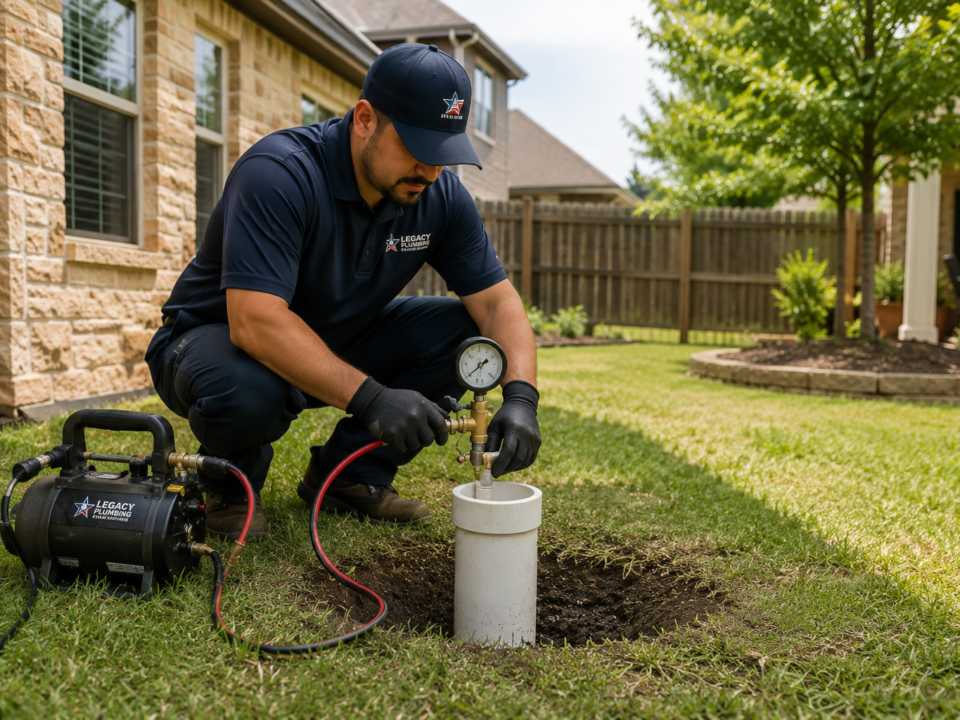
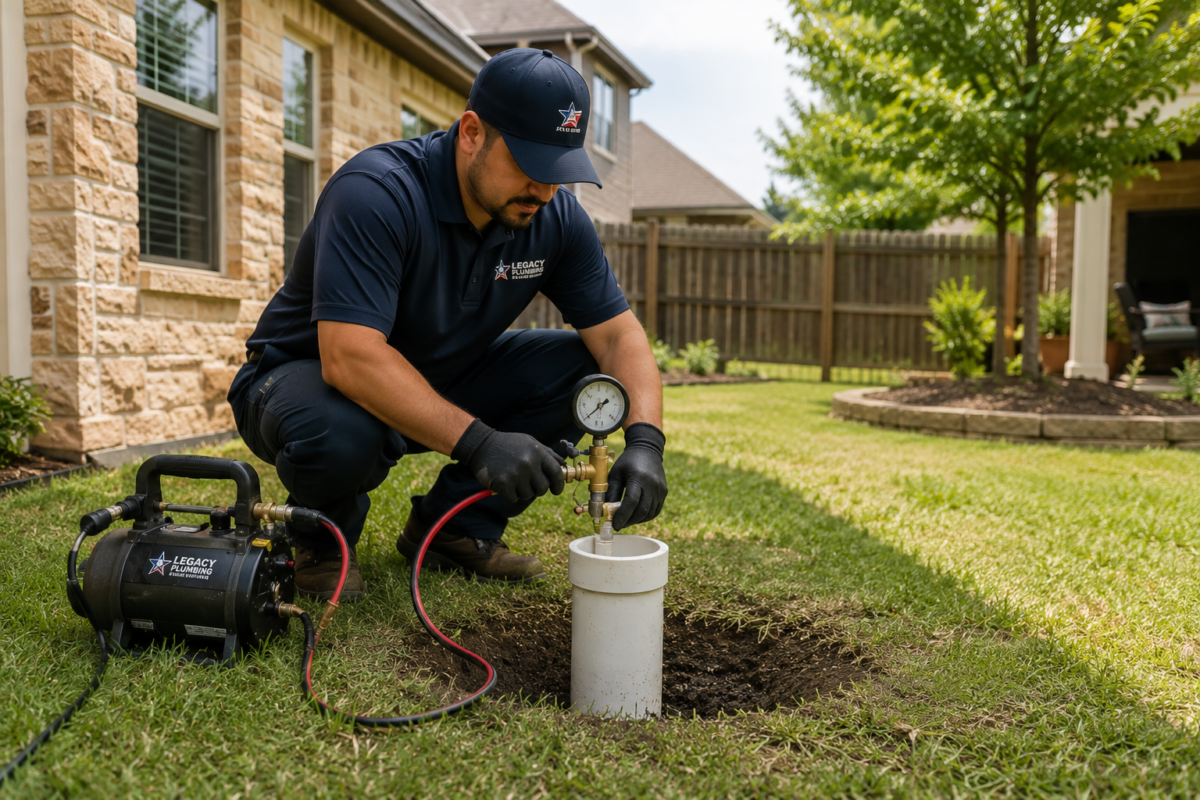
A crack alone does not confirm a plumbing issue, but it warrants investigation. A plumber can perform a hydrostatic test to determine whether a leak is contributing.
Sign 4: Doors or Windows That No Longer Close Properly
When a foundation shifts unevenly, door and window frames shift too. If multiple doors or windows in the same area of the home are affected, that pattern often points to localized soil movement beneath the slab. Homeowners often attribute this to humidity or seasonal expansion before realizing it is a foundation issue — by which point the underlying cause may have been running for months.
What To Do
Document which doors and windows are affected and when you first noticed the change. This helps both your plumber and foundation contractor assess the pattern of movement.
Sign 5: You Can Hear Running Water When Everything Is Off
If you can hear running or dripping water when no faucets or appliances are in use, you likely have a leak. Under-slab leaks often produce a faint hissing or rushing sound most audible near exterior walls or in quiet rooms close to the ground.
What To Do
Turn off all water-using appliances and fixtures, then walk through your home listening carefully near floor level. If you hear water movement, call a plumber immediately. Do not wait.
What Happens Next
A licensed plumber can perform a hydrostatic pressure test to confirm whether there is a leak in your underground drain system, and a camera inspection to locate exactly where it is.
- Call or book online to schedule your hydrostatic test — same-day appointments are available most days in the Austin area
- Let us know your situation — whether you are pre-repair, post-repair, or investigating a suspected leak, the approach may vary slightly and we will confirm the right scope for your needs
- Receive your written report — after the test is complete, you will receive documentation of the result suitable for your foundation contractor and warranty file
- If repairs are needed, we will walk you through your options clearly — including costs, methods, and timeline — before any work begins
Frequently Asked Questions
Can a slab leak fix itself?
No. Plumbing leaks beneath a slab do not resolve on their own. Water will continue to escape, soil will continue to saturate, and the risk of foundation movement increases over time. Early detection and repair is always less costly than waiting.
How do I check for a slab leak myself?
Turn off all fixtures and appliances, then check your water meter’s low-flow indicator. If it is moving when everything is off, water is escaping. Note the reading, wait 30 minutes without using any water, and check again. A change in the reading confirms a leak — call a licensed plumber to locate and diagnose it.
Will a plumbing leak always cause foundation damage?
Not immediately, but the risk grows significantly over time. Central Texas clay soil swells and softens when saturated, causing differential movement in the foundation above. The longer a leak goes undetected, the greater the cumulative damage.
How much does slab leak detection cost in Austin?
Slab leak detection in Austin typically ranges from $150 to $400 for diagnosis depending on the method used. If you also need a hydrostatic test, budget $200 to $500.